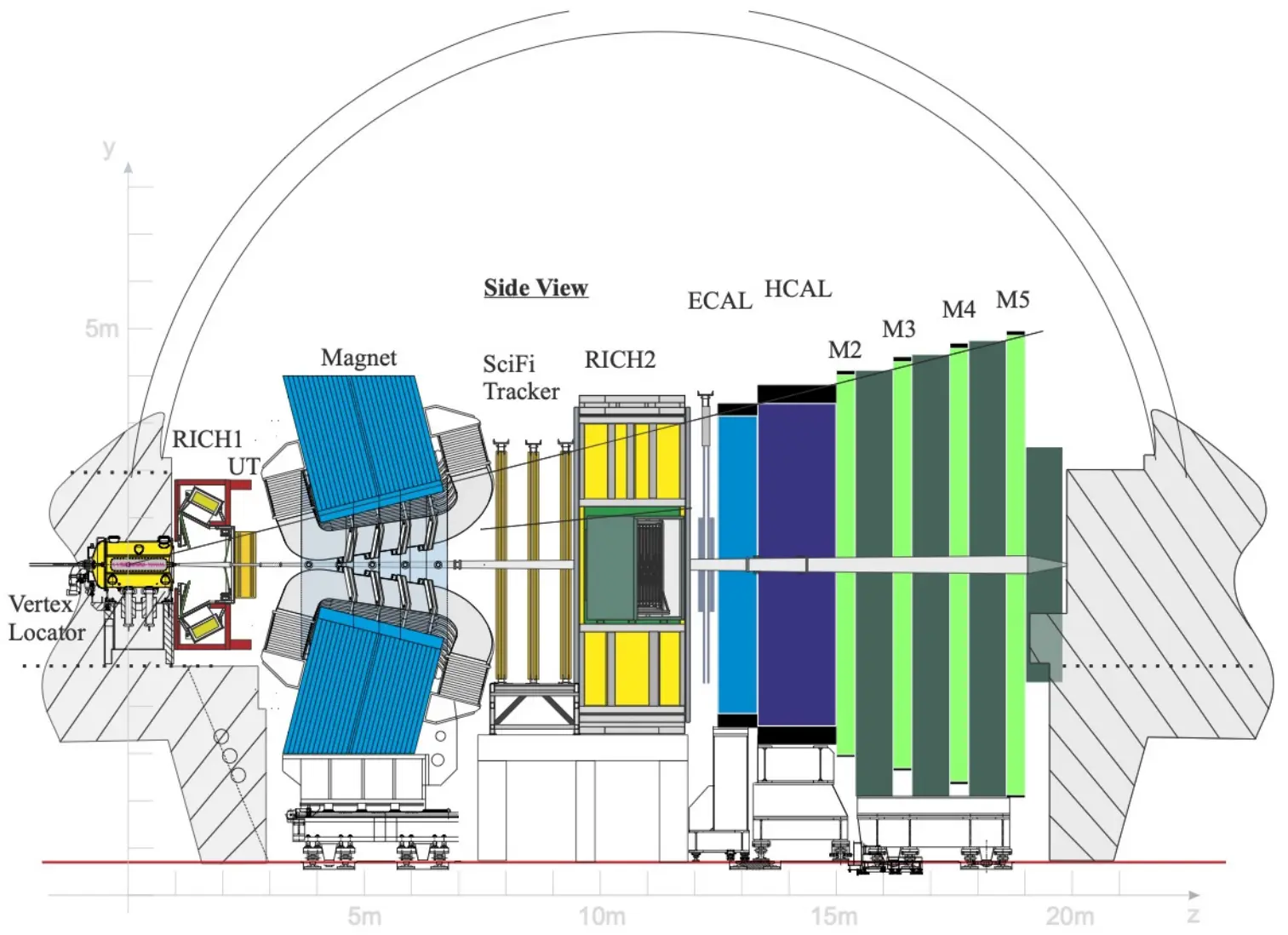
The LHCb collaboration presents “The LHCb upgrade I”, a comprehensive overview of the first major upgrade to the LHCb detector. This upgrade aims to significantly enhance the experiment’s capabilities, allowing for more precise measurements and the exploration of new physics phenomena. The document details the technical improvements, the expected performance enhancements, and the scientific goals driving this ambitious project. As part of the ongoing efforts to push the boundaries of particle physics research, this upgrade is a critical step for the LHCb experiment and the broader scientific community.
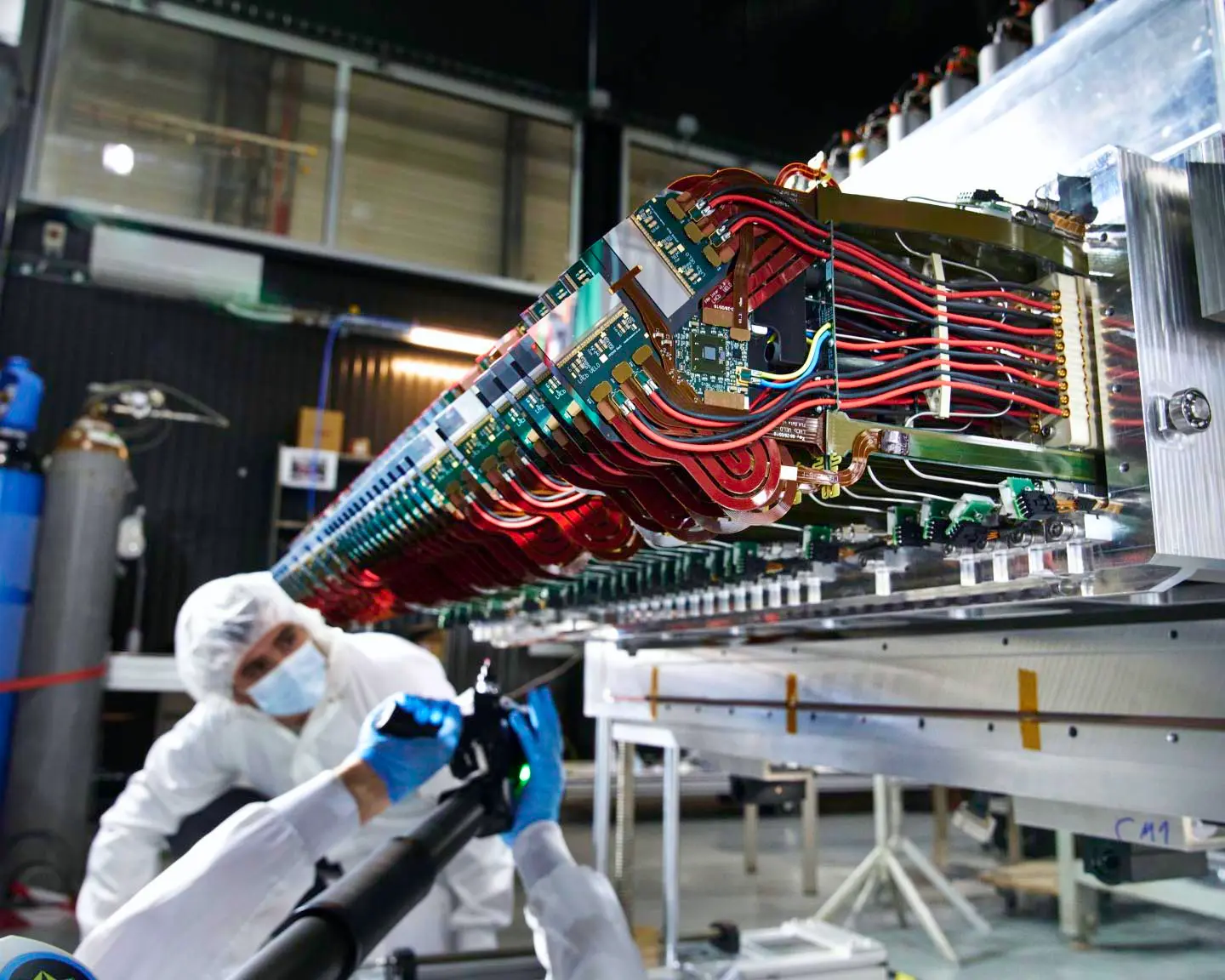
Figures illustrating key aspects of the LHCb upgrade I.
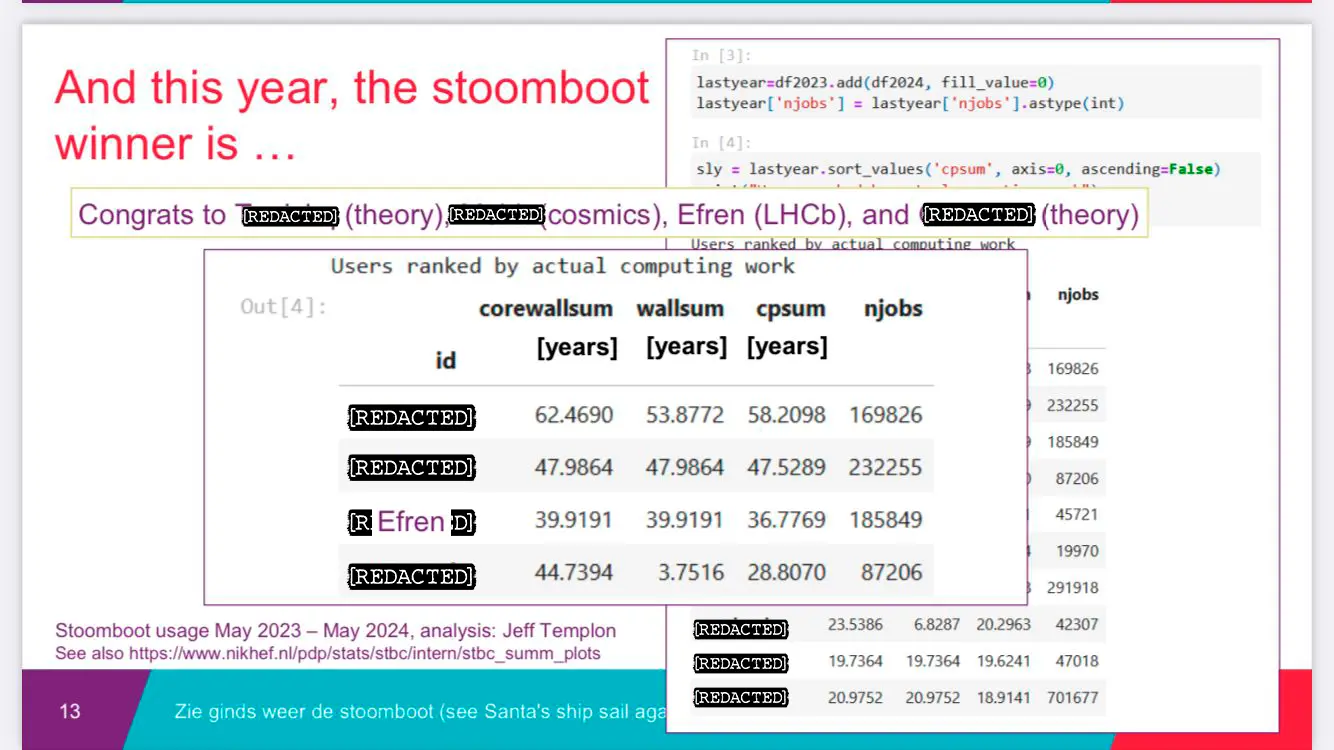
That’s right, I managed to snag the 3rd place in grid usage at Nikhef for my timing analysis of the Timepix4 telescope! All those jobs were processing data from multiple SPS test beam campaigns, running per-pixel calibrations, timewalk corrections, and track reconstruction to extract the telescope’s 92 ps timing resolution.
With over 185,849 jobs, I might have given the grid a bit of a workout. Maybe it’s time to get it a gym membership?
Big shoutout to my amazing team and colleagues for all the support and fun along the way. Here’s to more data crunching and less grid hogging in the future!
185.849 trabajos en el grid y sumando
¿Adivina quién ha mantenido el grid ocupado?
¡Así es, conseguí el 3er puesto en uso del grid en Nikhef por mi análisis temporal del telescopio Timepix4! Todos esos trabajos procesaban datos de múltiples campañas de haz en el SPS, ejecutando calibraciones píxel a píxel, correcciones de timewalk y reconstrucción de trazas para extraer la resolución temporal de 92 ps del telescopio.
Con más de 185.849 trabajos, puede que le haya dado al grid un buen entrenamiento. ¿Quizás es hora de conseguirle una membresía de gimnasio?
Un gran saludo a mi increíble equipo y colegas por todo el apoyo y diversión en el camino. ¡Por más procesamiento de datos y menos acaparamiento del grid en el futuro!
In a recent workshop titled “Generative AI for Dummies,” which I co-ran with my colleague Víctor López Pardo, we set out to give researchers a practical introduction to Generative AI. Our attendees ranged from Ph.D. students to experienced researchers, all wanting to understand what these tools can do for their work.
Generative AI can create new data and text, and has real potential for research workflows. During the workshop, we focused on practical applications: how these tools can help with research tasks day to day. Participants got hands-on experience with tools like ChatGPT, testing what works and what doesn’t for their specific needs.
The workshop led to good discussions about where AI tools help and where they fall short. The feedback showed real interest in using these tools for research, but also healthy scepticism about their limitations.
If your team or department is interested in a similar session, I’d be happy to put one together.
Un taller práctico de IA para investigadores
En un taller reciente titulado “IA Generativa para Principiantes”, que co-dirigí con mi colega Víctor López Pardo, nos propusimos dar a los investigadores una introducción práctica a la IA Generativa. Nuestros asistentes iban desde estudiantes de doctorado hasta investigadores experimentados, todos queriendo entender qué pueden hacer estas herramientas en su trabajo.
La IA Generativa puede crear datos y texto nuevos, y tiene potencial real para los flujos de trabajo de investigación. Durante el taller, nos centramos en aplicaciones prácticas: cómo estas herramientas pueden ayudar con tareas de investigación en el día a día. Los participantes tuvieron experiencia práctica con herramientas como ChatGPT, probando qué funciona y qué no para sus necesidades específicas.
El taller generó buenas discusiones sobre dónde ayudan las herramientas de IA y dónde se quedan cortas. Los comentarios mostraron interés real en usar estas herramientas para investigación, pero también un escepticismo sano sobre sus limitaciones.
Si tu equipo o departamento está interesado en una sesión similar, encantado de preparar una.
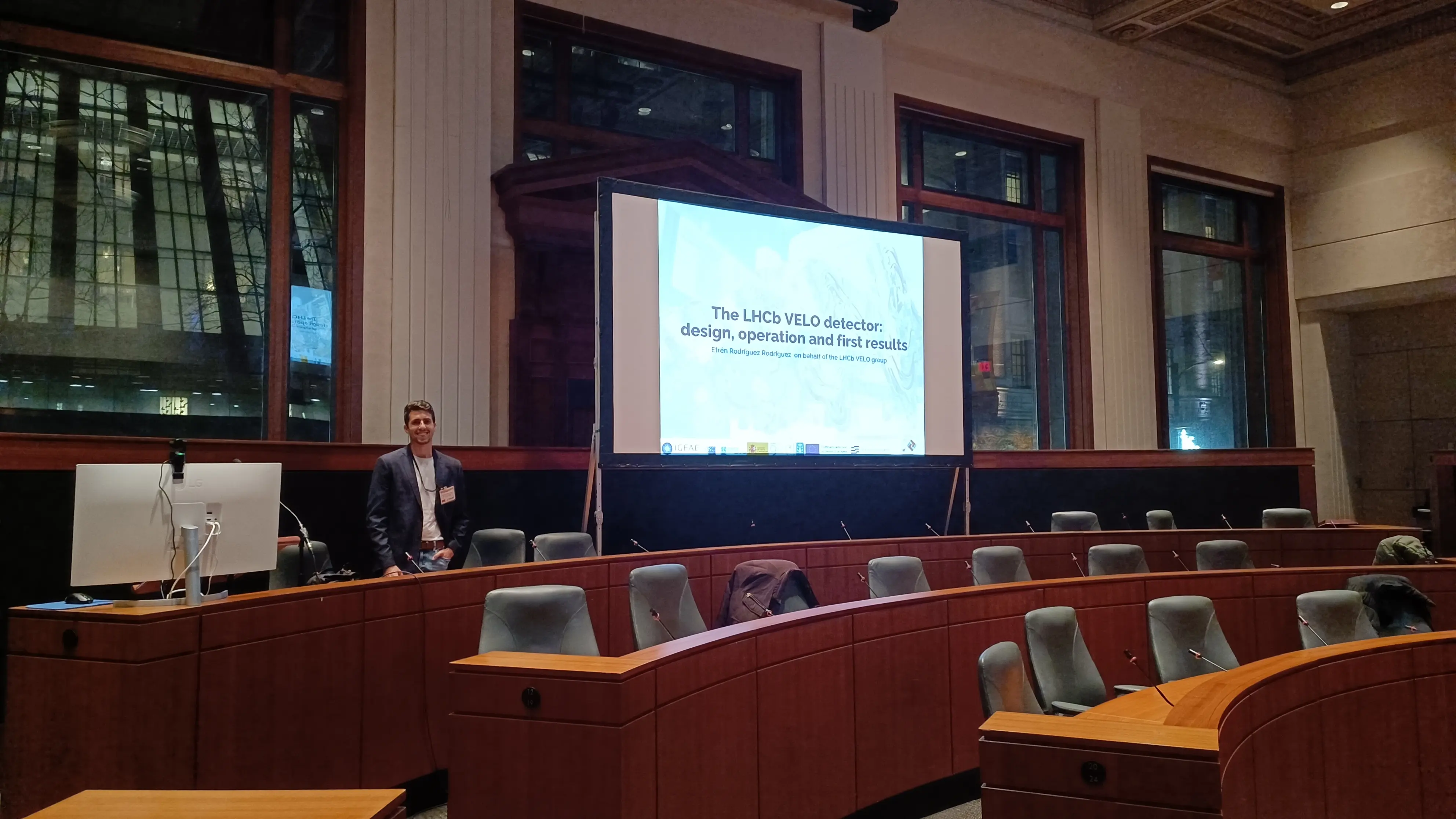
I presented at the “Hiroshima” Symposium on the Development and Application of Semiconductor Tracking Detectors, held in Vancouver, Canada.
The focus of my presentation was the LHCb VELO detector: 52 modules, 41 million pixels, operating just 5.1 mm from the LHC beam. The detector delivers the impact parameter resolution and tracking performance needed for the high-luminosity conditions at the LHC.
My talk covered the detector’s design, commissioning results (including threshold equalization, noise performance, and hit efficiency), and early tracking performance in Run 3.
The symposium was a good opportunity to share our results and exchange ideas with other groups working on semiconductor tracking detectors.
Presentando el VELO en el Simposio de Hiroshima
Presenté en el Simposio “Hiroshima” sobre Desarrollo y Aplicación de Detectores de Seguimiento de Semiconductores, celebrado en Vancouver, Canadá.
Mi presentación se centró en el detector LHCb VELO: 52 módulos, 41 millones de píxeles, operando a solo 5,1 mm del haz del LHC. El detector VELO ofrece la resolución de parámetro de impacto y la capacidad de seguimiento que exigen las condiciones de alta luminosidad del LHC.
En mi charla presenté el diseño del detector, los resultados de puesta en marcha (incluyendo ecualización de umbrales, rendimiento de ruido y eficiencia de impacto), y los primeros resultados de tracking del Run 3.
El simposio fue una buena oportunidad para compartir nuestros resultados e intercambiar ideas con otros grupos que trabajan en detectores de seguimiento de semiconductores.