Rodríguez Rodríguez, E. (2023). Silicon vertex detector with timing for the Upgrade II of LHCb. Nuclear Instruments and Methods in Physics Research Section A: Accelerators, Spectrometers, Detectors and Associated Equipment, 1048, 167965. DOI: https://doi.org/10.1016/j.nima.2022.167965
Abstract
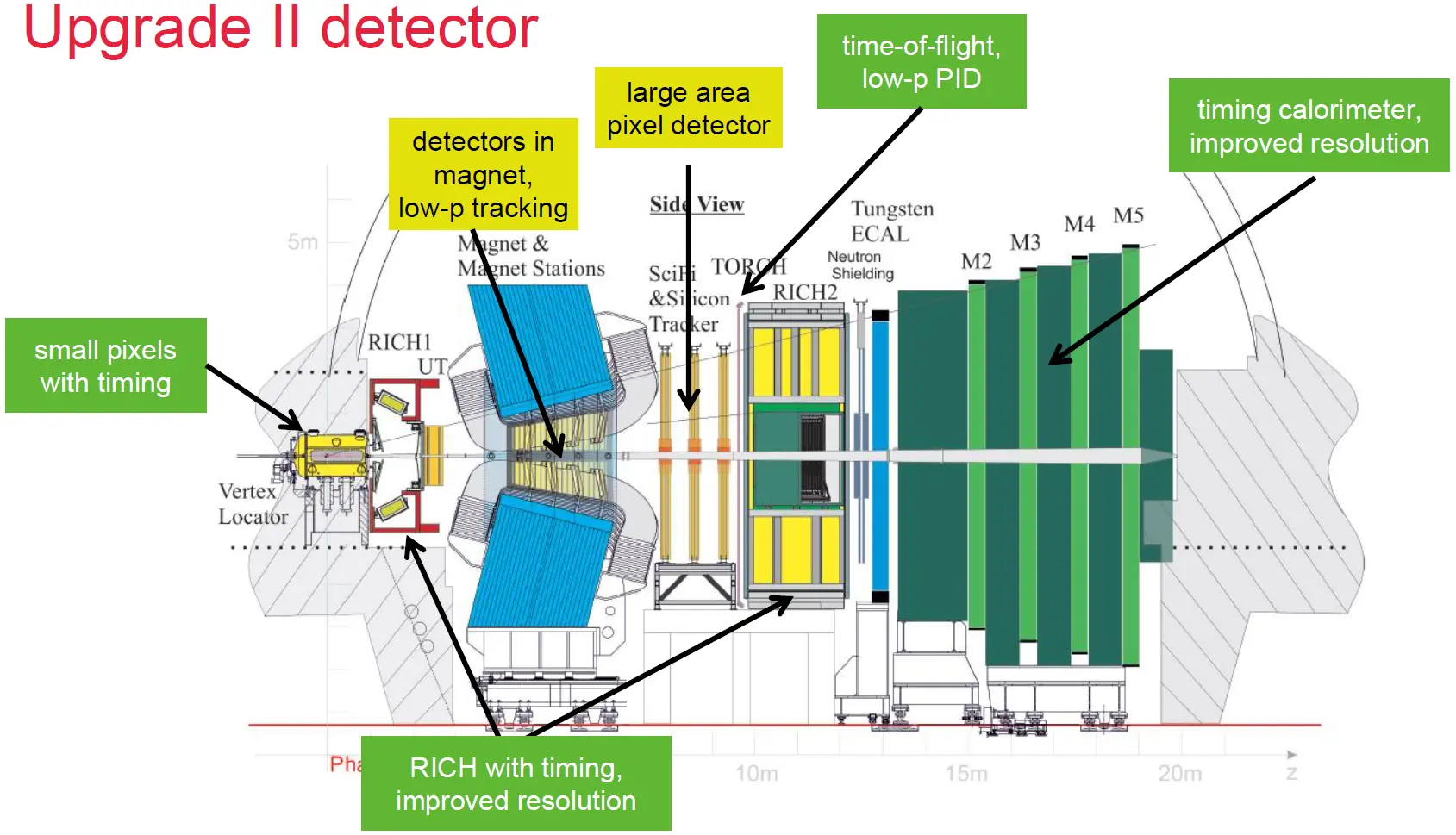
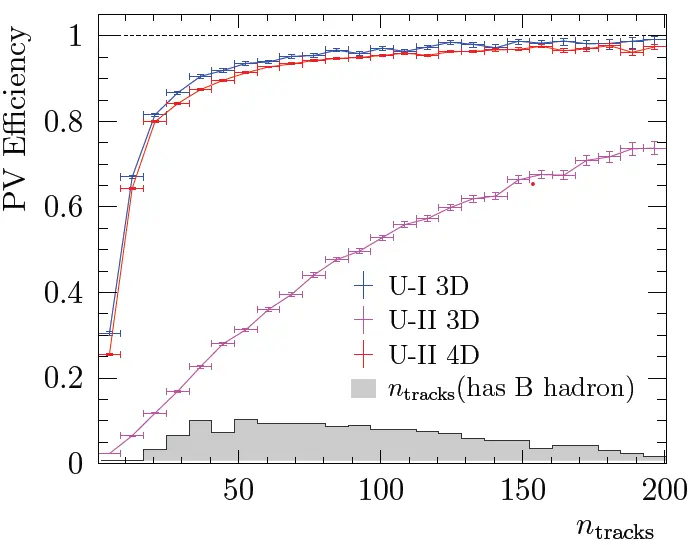
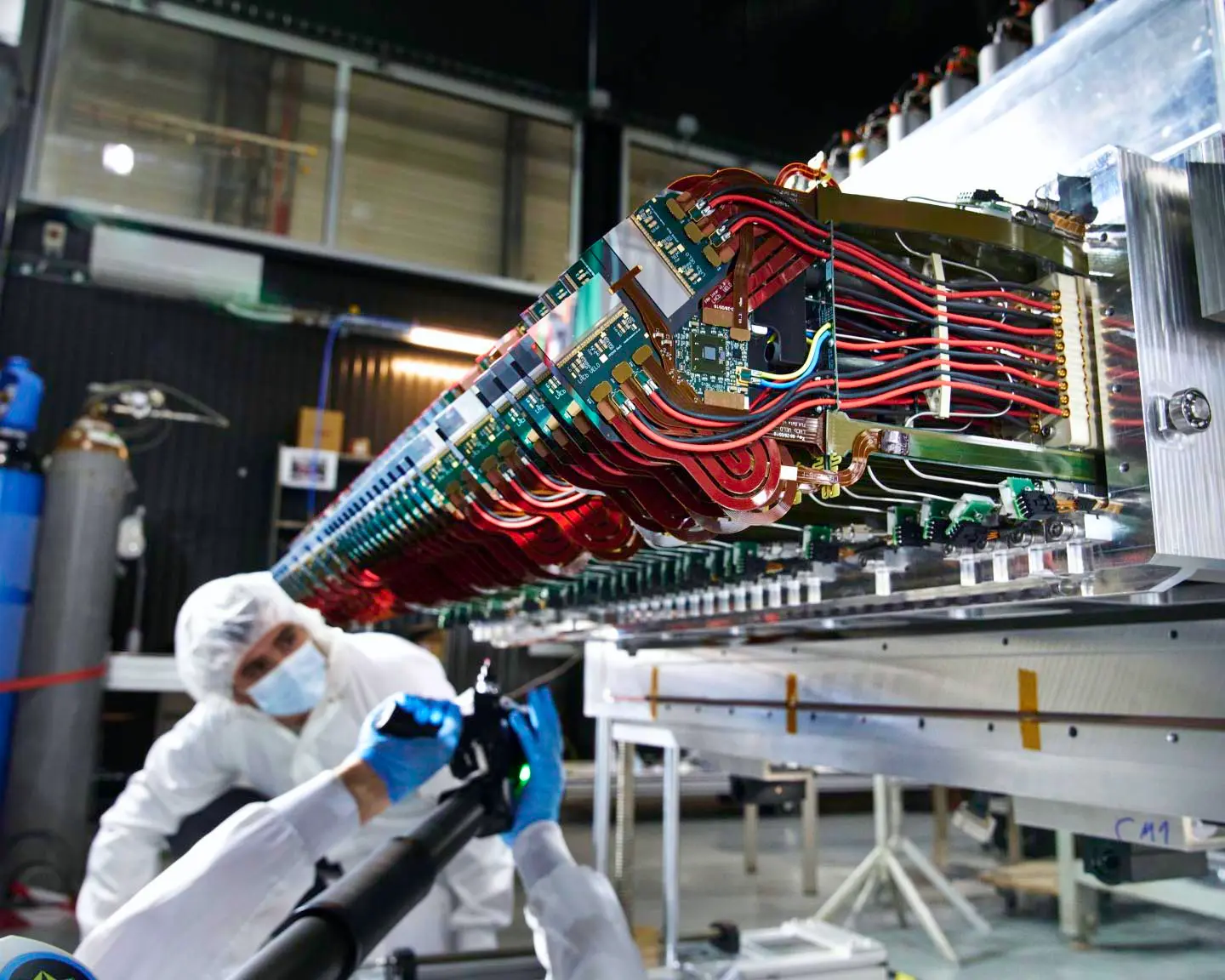
LHCb has recently submitted a physics case for an Upgrade II detector to begin operation in 2031. The upcoming upgrade is designed to run at instantaneous luminosities of 1.5×10^34 cm^−2 s^−1, to accumulate a data sample with a corresponding integrated luminosity of over 300 fb^−1. The LHCb physics programme relies on an efficient and precise vertex detector (VELO). Compared to Upgrade I, the data output rates, radiation levels, and occupancies will be about ten times higher. To cope with the increase in pile-up, new techniques for assigning b-quark–hadrons to their primary vertex and for performing real-time pattern recognition are needed. This report discusses the most promising technologies for the HL-LHC upgrade, with a focus on timing precision as a tool for vertexing in next-generation detectors. An initial simulation effort has been made to investigate the required temporal resolution to mitigate pile-up and identify secondary vertices, pointing to at least 20 ps per track. Recent results from beam tests motivated by time measurements will be presented along with R&D scenarios for the future upgrade. Improvements in the mechanical design of the Upgrade II VELO will also be discussed, aiming to minimize the material before the first measured track point and achieve a fully integrated module design with thinned sensors and ASICs combined with a lightweight cooling solution.