Starting a new role with CERN’s VELO Group Nuevo puesto en el Grupo VELO del CERN
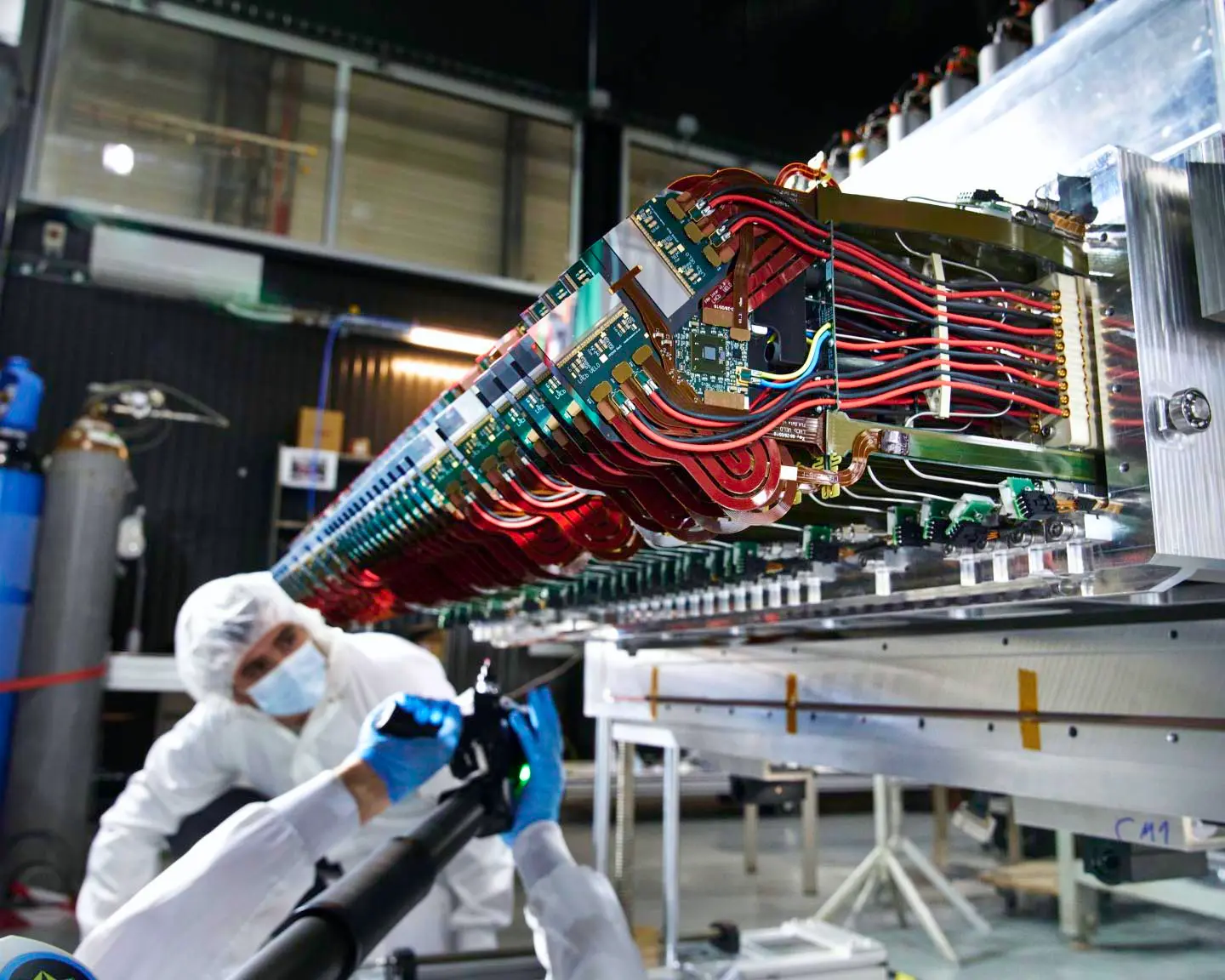
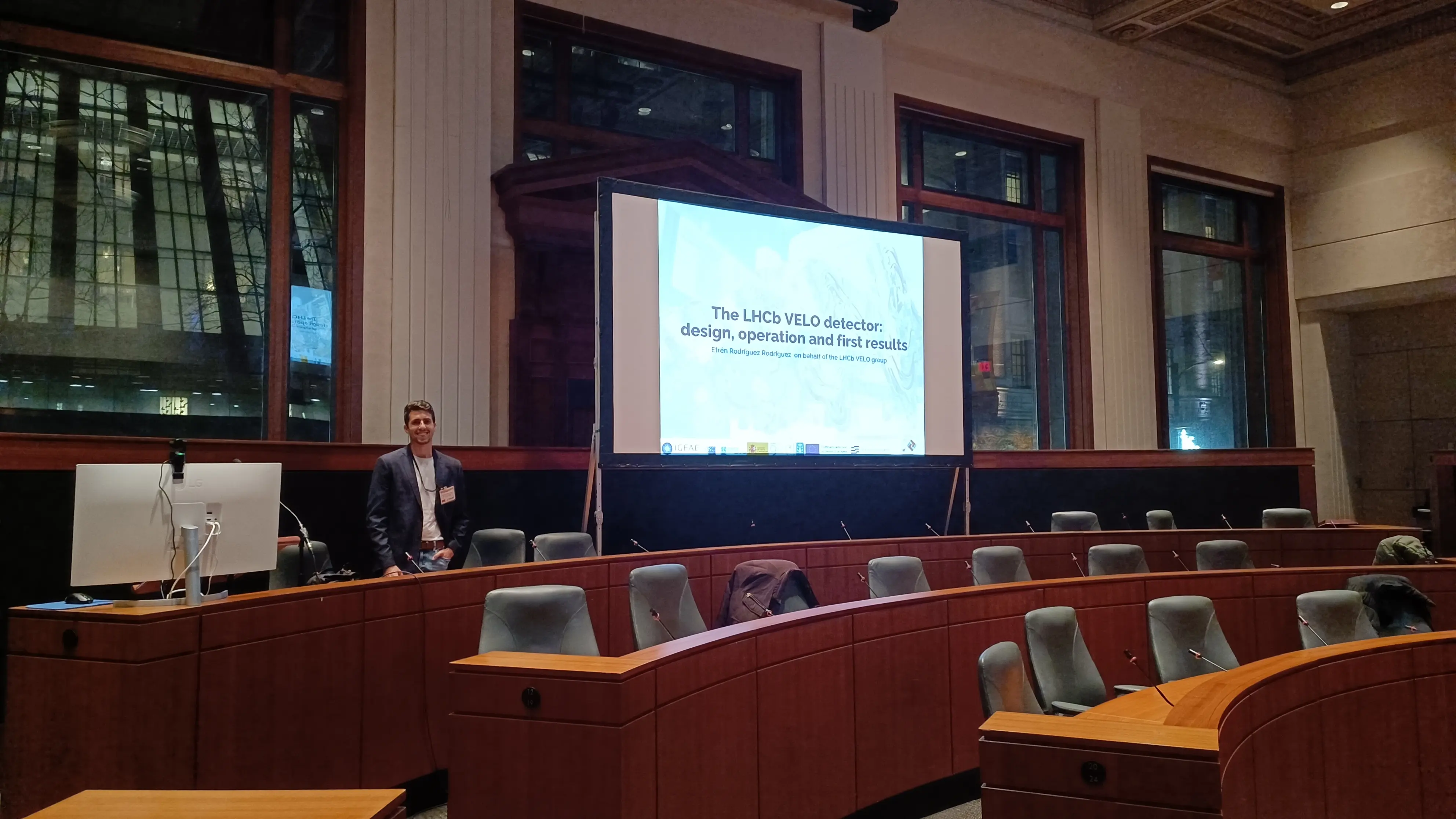
As of October, I’ve officially started a new chapter in my career as part of the VELO (Vertex Locator) group at CERN, where I’ll be contributing to the group’s research and technologies. The VELO detector is a key component of the LHCb experiment, and I’ll be working on advancing its performance and capabilities.
My current work focuses on several projects, including the simulation of 3D column silicon sensors for the VELO, the development of the Timepix4 telescope, and creating new testing techniques for high-energy physics sensors. These projects combine particle physics, sensor technology, and data analysis, and they aim to advance our understanding of fundamental physics.
The Timepix4 telescope is one of the highlights of my work. It uses an 8-plane configuration with Timepix4 ASICs (448×512 pixels, 55 μm pitch, 195 ps TDC binning) to achieve 92 ps track timing and 2.3 μm pointing resolution, the only beam telescope combining both capabilities at this level. Leading test beam campaigns at the SPS, overseeing construction, and coordinating teams across institutions are some of the responsibilities I’m taking on. I’m also working on refining data analysis techniques using the LGADUtils framework to improve the output of experiments at CERN.
Joining the VELO group has been a big challenge. The work involves complex simulations, new ideas, and collaboration with researchers across CERN and the global physics community. I’m looking forward to what comes next, both in the physics results and the technology development.
Desde octubre, he comenzado oficialmente un nuevo capítulo en mi carrera como parte del grupo VELO (Vertex Locator) en el CERN, donde contribuiré a la investigación y al desarrollo tecnológico del grupo. El detector VELO es un componente clave del experimento LHCb, y trabajaré en mejorar su rendimiento y capacidades.
Mi trabajo actual se centra en varios proyectos, incluyendo la simulación de sensores de silicio 3D columnares para el VELO, el desarrollo del telescopio Timepix4, y la creación de nuevas técnicas de prueba para sensores de física de altas energías. Estos proyectos combinan la física de partículas, la tecnología de sensores y el análisis de datos, y buscan avanzar en nuestra comprensión de la física fundamental.
El telescopio Timepix4 es uno de los aspectos más destacados de mi trabajo. Utiliza una configuración de 8 planos con ASICs Timepix4 (448×512 píxeles, 55 μm de paso, 195 ps de resolución TDC) para alcanzar 92 ps de resolución temporal en traza y 2,3 μm de resolución de apuntado, el único telescopio de haz que combina ambas capacidades a este nivel. Liderar campañas de haces de prueba en el SPS, supervisar la construcción y coordinar equipos entre instituciones son algunas de las responsabilidades que asumo. También estoy refinando técnicas de análisis de datos mediante el framework LGADUtils para mejorar los resultados de los experimentos en el CERN.
Unirme al grupo VELO ha sido un gran reto. El trabajo implica simulaciones complejas, nuevas ideas y colaboración con investigadores del CERN y la comunidad física global. Con ganas de ver lo que viene, tanto en los resultados de física como en el desarrollo tecnológico.