Why is there more matter than antimatter in the universe? ¿Por qué hay más materia que antimateria en el universo?
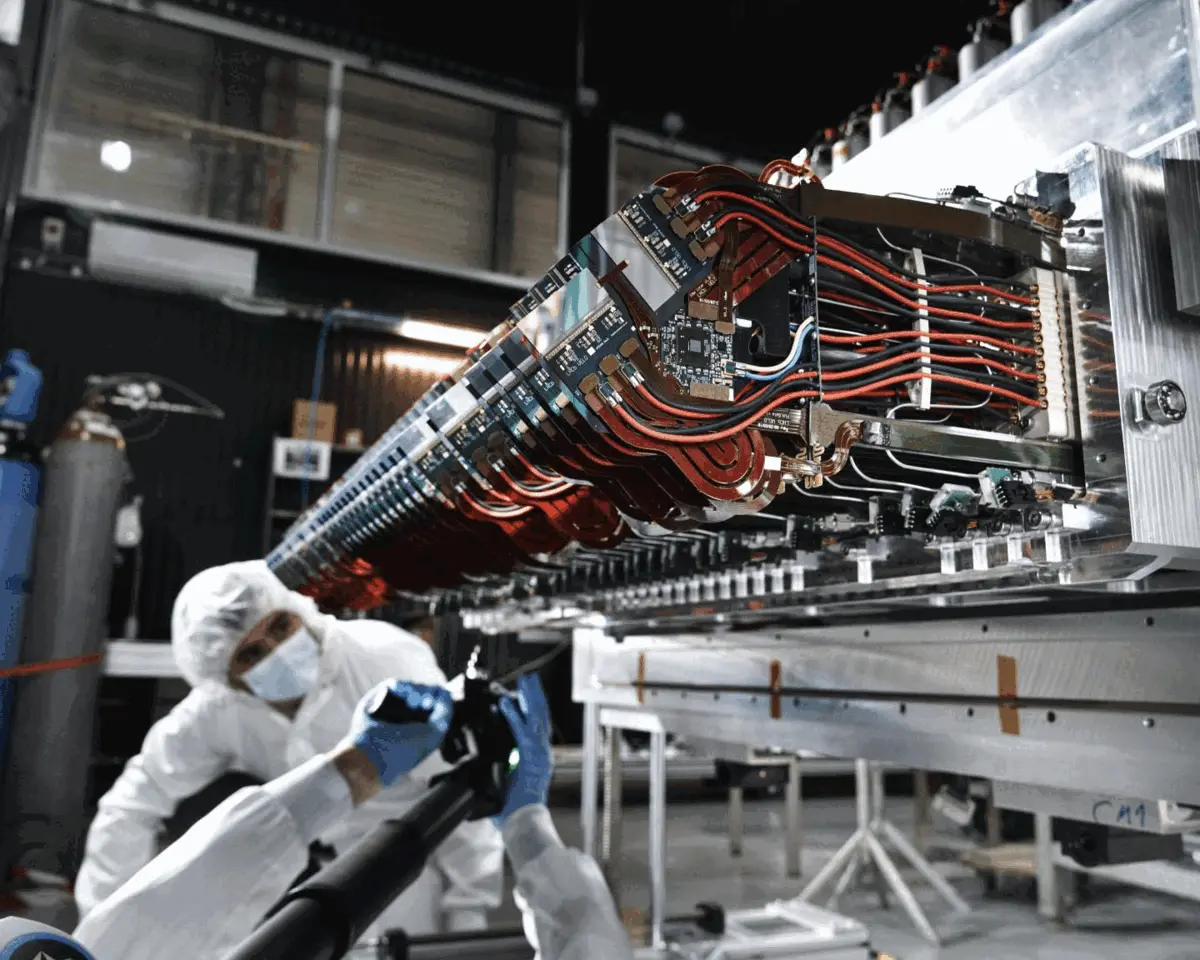
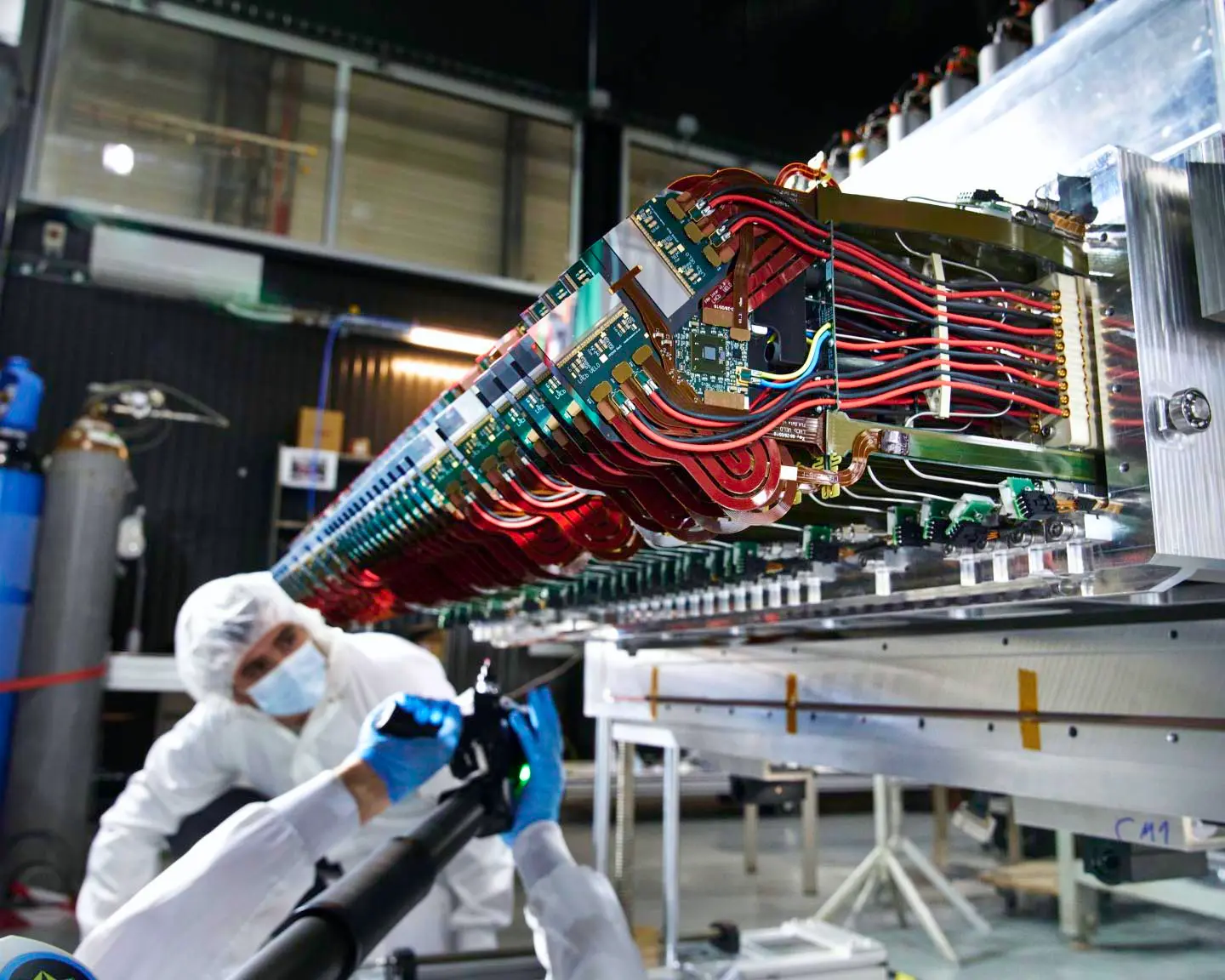
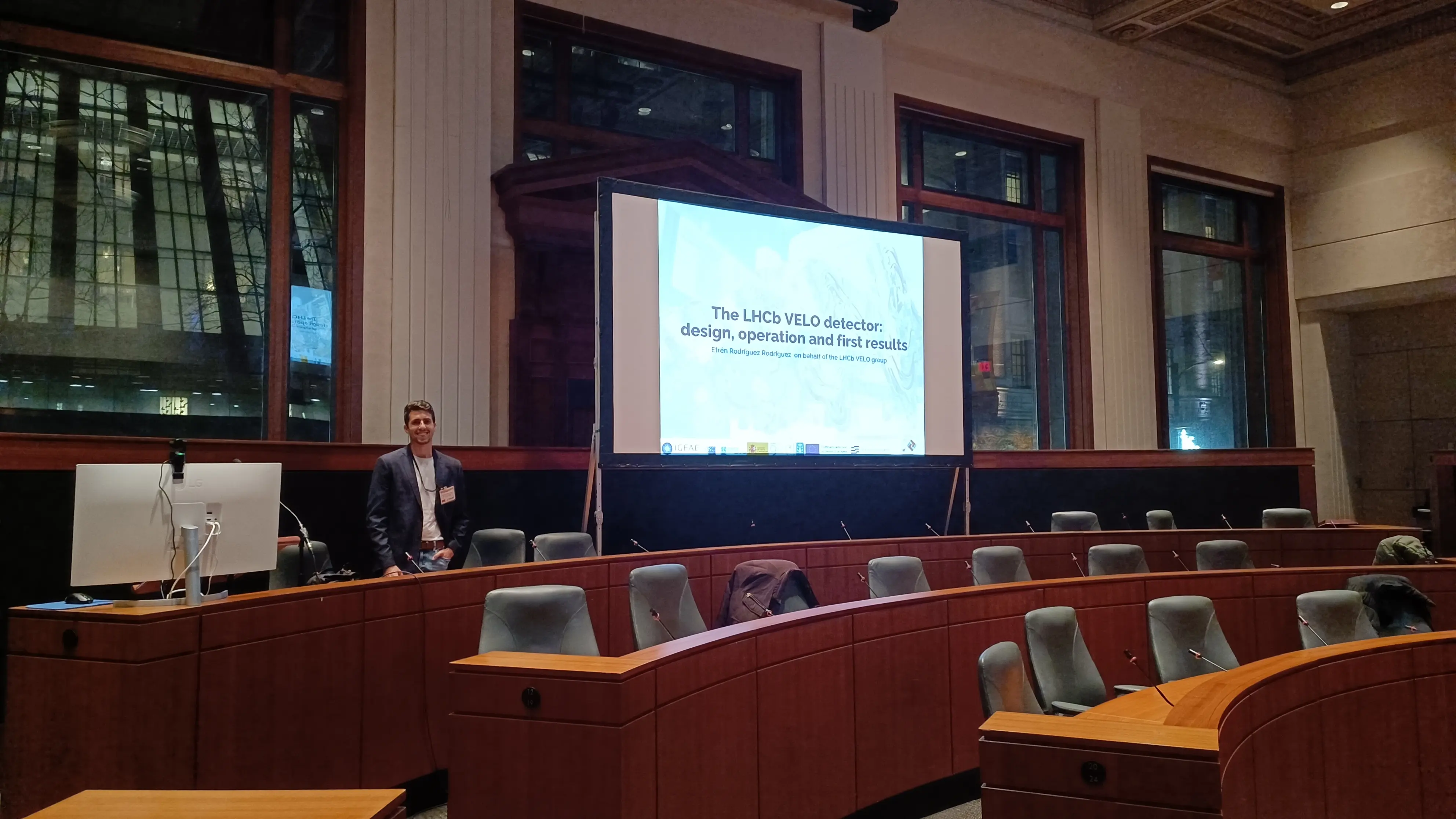
Working on some of the biggest open questions in physics, our researchers from the Instituto Galego de Física de Altas Enerxías (IGFAE), including Edgar Lemos Cid, Antonio Fernández Prieto, and Efrén Rodríguez Rodríguez, travelled to CERN. Their objective: to install and commission the new VELO detector for the LHCb experiment, a major step for the project.
This Tuesday, July 5th, the VELO detector goes live with the start of #LHCRun3 at the Large Hadron Collider (LHC) after years of upgrades. The detector comprises 52 modules with 624 VeloPix ASICs and 41 million pixels, approaching within 5.1 mm of the LHC beam. A result of IGFAE’s work since 2008, it represents years of R&D in particle physics. Designed to measure b mesons with high precision, it is a key tool for exploring physics beyond the Standard Model.
The IGFAE’s involvement in the design and development of the VELO subdetector sensors reflects over a decade of work in the field. With the detector now taking collision data, the team’s years of effort are paying off.
This is a major step forward for the experiment, and for the international collaboration that made it possible.
Trabajando en algunas de las grandes preguntas abiertas de la física, nuestros investigadores del Instituto Galego de Física de Altas Enerxías (IGFAE), incluyendo a Edgar Lemos Cid, Antonio Fernández Prieto y Efrén Rodríguez Rodríguez, viajaron al CERN. Su objetivo: instalar y poner en marcha el nuevo detector VELO para el experimento LHCb, un paso importante para el proyecto.
Este martes 5 de julio el detector VELO entra en funcionamiento con el comienzo del #LHCRun3 en el Gran Colisionador de Hadrones (LHC) tras años de mejoras. El detector consta de 52 módulos con 624 ASICs VeloPix y 41 millones de píxeles, acercándose a 5,1 mm del haz del LHC. Resultado del trabajo del IGFAE desde 2008, representa años de I+D en física de partículas. Diseñado para medir mesones b con alta precisión, es una herramienta clave para explorar la física más allá del Modelo Estándar.
La participación del IGFAE en el diseño y desarrollo de los sensores del subdetector VELO refleja más de una década de trabajo en el campo. Con el detector tomando ahora datos de colisiones, los años de esfuerzo del equipo están dando sus frutos.
Este es un paso importante para el experimento y para la colaboración internacional que lo hizo posible.