Project Overview
| Role: Campaign Lead | Duration: 2020-2021 | Organization: IGFAE / University of Santiago de Compostela |
The Challenge
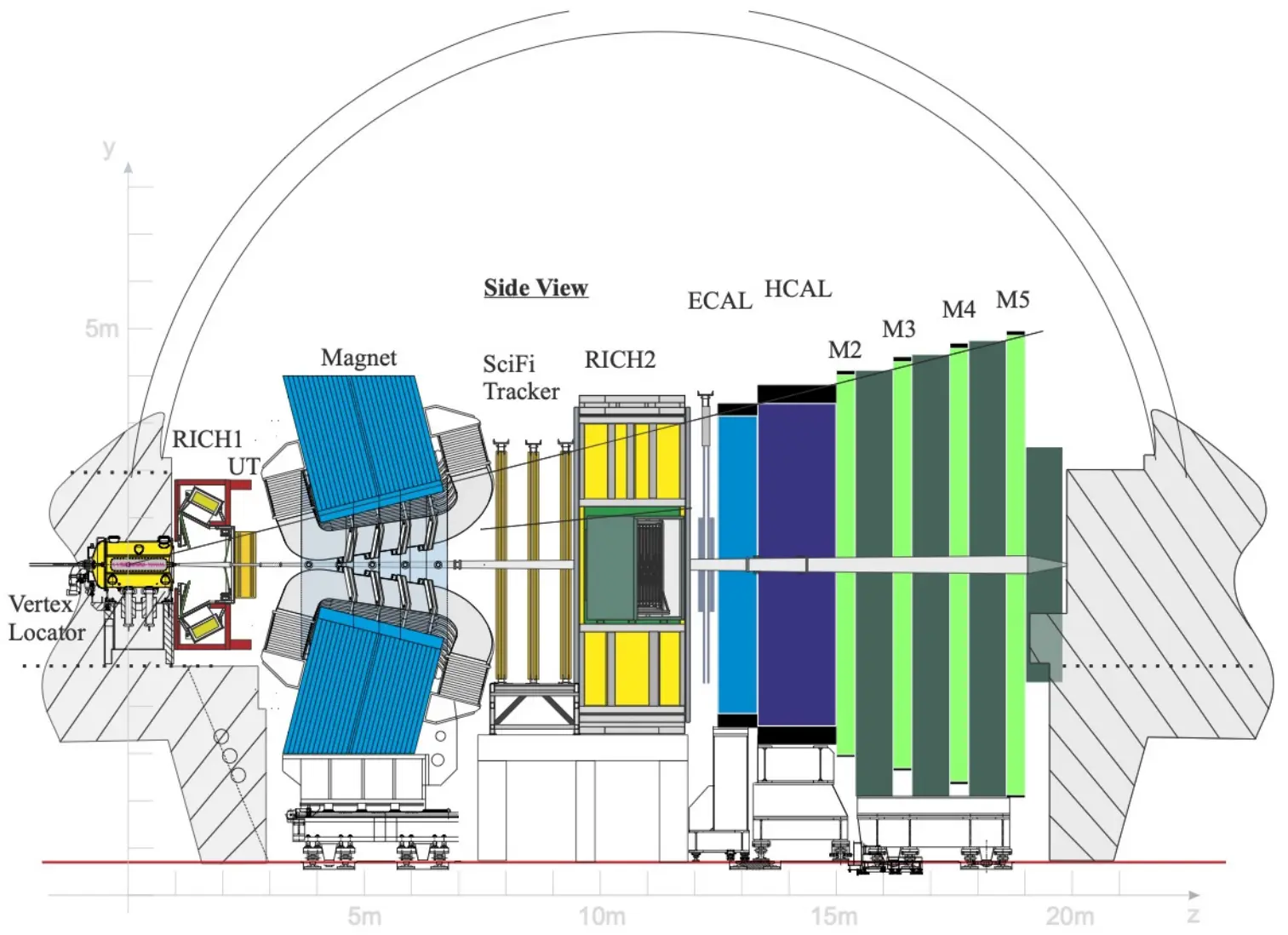
The VELO detector’s silicon pixels are bonded to modules with a special adhesive. Before installation, these adhesive samples needed to survive radiation doses equivalent to their full operational lifetime in the LHCb. The task: deliver a uniform 600 Mrad dose to 4 silicon-sandwich samples using a shared X-ray tube at the university’s radiology service, with limited machine availability.
My Contribution
Led the full campaign from planning to sample delivery:
- Extended a Python analysis framework (originally developed in my master’s thesis) to interpolate X-ray dose distributions in 3D, adding functions to calculate optimal sample angle for uniform irradiation on non-parallel planes
- Calculated beam attenuation through the first sample (35% transmission) using X-ray energy profiles and NIST mass attenuation coefficients, then placed two samples in series, swapping them mid-campaign so both received equal total dose
- Designed rigid sample holders with micrometer alignment guides for repeatable positioning between irradiation sessions, optimizing the tilt angle to compensate for the non-uniform beam profile
- Negotiated 15 days continuous X-ray tube access over Christmas holidays for the first 2 samples (600 Mrad each) and organized weekend-only sessions for the remaining 2 (300 Mrad each)
Technical Stack
Python X-Ray Physics NIST Data NumPy SciPy Data Interpolation Experimental Design
Results
- 600 Mrad delivered to 2 samples (15 days continuous exposure)
- 300 Mrad delivered to 2 samples (weekend sessions)
- 5% dose uniformity across each sample (max-to-min variation)
- All samples passed downstream resistance testing by the module construction team
- Irradiation technique validated for future VELO component qualification campaigns
Industry Relevance
End-to-end experimental campaign management: requirements gathering from another team, facility negotiation, Python-based dose simulation, custom fixturing design, and execution under tight scheduling constraints. Applicable to any role involving radiation testing, materials qualification, reliability engineering, or hardware validation in regulated environments.